A curious idea.
A world to explore.
What is orgone? Where did it come from? And what should you know about the objects sold in its name?
Explore the history, meet the ideas and take a closer look at the craft. Plain English, useful sources and room for questions.
Start with the basics ↗
History & curious ideas
THE STORY BEHIND THE WORD
Who was Wilhelm Reich?
A physician, a psychoanalyst and the man behind orgone. His story is the best place to begin.
Meet the man behind the idea →
Orgone, in plain English
What Reich meant, and why people still ask about it.
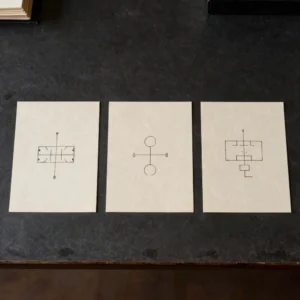
Orgone and orgonite are different things
A useful distinction before you browse the shops.
Curiosity is welcome here. So are careful questions.
Devices & evidence
UNDERSTAND BEFORE YOU DECIDE
The box at the centre of the story
How an accumulator was built, and what its construction can tell us.

What would convincing evidence look like?
A warm box, a personal experience and a scientific test answer different questions.

Go back to the source
Explore Reich’s writings and the museum that preserves his work.
Images are illustrative, drawn from the existing orgone.info collection. They are not presented as archival photographs or proof of an effect.
Objects, craft & considered choices
A BUYER’S STARTING POINTA piece can be interesting for its design, materials or personal meaning. Start there, then look carefully at what the seller promises.
Resin pieces & pyramids
Ask for the dimensions, materials and photographs of the actual piece. Look closely at the finish, base and any sharp edges.
Pendants & jewellery
Check the weight, chain length and metal that touches your skin. A clear materials list matters more than a dramatic energy claim.
Books & original ideas
Check the author, edition and whether you are buying Reich’s own writing or someone else’s interpretation.
No products are ranked or recommended yet. We will compare real items and explain why each is included. Where a link earns us a commission, it will be labelled beside the link.
A little more, without the long read
OPEN A STORY BELOWWhat is orgone?
Orgone was Wilhelm Reich’s name for an energy he believed existed in living things and in the wider natural world. It became a central idea in his later work.
It helps to separate three things: Reich’s theory, the devices he built around it, and the products now sold using similar language. They are often mixed together online.
Here, we explore those ideas without asking you to accept a sales pitch. An unusual history can be worth reading even when the claims remain disputed.
Who was Wilhelm Reich?
Wilhelm Reich (1897–1957) was an Austrian physician and psychoanalyst. His career took him from Vienna through Berlin and Scandinavia to the United States.
His work moved from psychoanalysis towards questions about the body, biology and what he called orgone energy. That change of direction is important: his earlier therapeutic ideas and his later energy claims should not be treated as one single finding.
The Wilhelm Reich Museum in Rangeley, Maine, preserves his work and offers a detailed biography. It is a useful source for his life and writings, while its interpretation reflects its mission to preserve his legacy.
Source: Wilhelm Reich Museum, biography.
Orgone and orgonite: what is the difference?
Orgone is the name of Reich’s proposed energy. Orgonite is a name used for resin objects containing materials such as metal and crystals.
That does not make a modern resin pyramid a miniature version of Reich’s accumulator. The museum explicitly distinguishes resin-and-crystal objects from his materials-based devices.
If you like an orgonite piece, consider it for its appearance, workmanship or personal meaning. Those are things you can judge without accepting claims about invisible energy.
Source: Wilhelm Reich Museum, explanation of materials and the distinction from orgonite.
What was an orgone accumulator?
The best-known accumulator was a box built with layers of different materials. Reich intended it to concentrate the energy he called orgone.
Understanding a device’s construction is different from showing that its proposed explanation is correct. A diagram can describe the layers; it cannot establish the existence of a new energy.
For historical reading, Reich published a booklet about the accumulator in 1951. Read it as a primary account of his ideas, rather than as current medical advice.
Source: Reich’s 1951 booklet, museum edition.
How should we look at the evidence?
Start with a specific question. Does a box show a temperature difference? Does a person feel more relaxed? Does a treatment improve a medical outcome? Each needs a different kind of test.
A fair comparison should account for ordinary explanations, use suitable controls and report uncertainty. Independent repetition matters too. A personal experience can be meaningful without proving what caused it.
We do not recommend orgone products as medical treatments. Cancer Research UK reports that energy healing has no reliable scientific evidence supporting it as a cancer treatment. A product page or testimonial should never be a reason to delay appropriate care.
Further reading: Cancer Research UK, healing; the museum’s discussion of accumulator research and its limitations.
Where can I read more?
Begin with the museum’s biography, then browse its research and publications timeline. Both help establish what Reich wrote and when.
Keep the source’s role in mind. A museum preserves a legacy; a seller markets a product; a study tests a particular question. Reading across those roles gives you a clearer picture than relying on one voice.